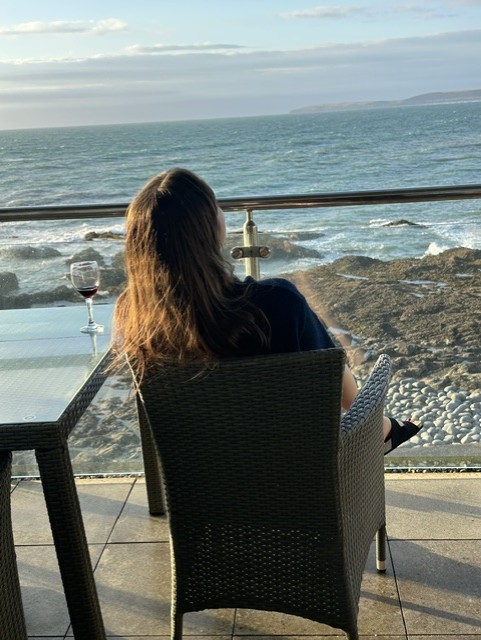


We’ve just come back from a week in North Devon. Not glamping this time — a modern self-catering flat at Westward Ho!, looking straight out at the Atlantic, with a view that did most of the work. Five of us, seven nights for just under £1800.
It was, to be fair, a good week. The flat was warm, clean and comfortable. Three bedrooms, two bathrooms, a bath as well as a shower, a washing machine, a tumble dryer, fast wi-fi and enough sofa for everyone. Nothing went wrong, nothing was missing, and after a wet afternoon on the beach at Westward Ho! we were very glad of the radiators and the tumble dryer.
And yet. By about day three we all said the same thing, in slightly different words: it could have been anywhere. Take away the window, and that flat could have been in Manchester, Milton Keynes or Malaga. It was extremely comfortable and it had absolutely no personality. That’s what sent us home doing sums — and it’s why we’d book glamping next time.
The cost, honestly
£1,766 for seven nights works out at £252 a night. For a family flat in a popular North Devon spot in season, that is not a rip-off. It is simply what coastal self-catering costs now, and the closer you get to Westward Ho!, Croyde, Woolacombe or Ilfracombe in August, the more you pay for the postcode.
What genuinely surprised us was looking again afterwards. At the same place, for the same week, a two-bedroom flat sleeping four was £2,500 — considerably more than the three-bedroom we had actually stayed in. Prices at the coast in July have very little to do with how many bedrooms you get.
So take that as the fair yardstick for a family of four in Westward Ho! in high summer: £2,500 for the week, or £357 a night, or £89 per person per night. Now compare it with glamping.
What that looks like in practice
Take Coastal Cabins at Hartland, around 15 miles along the coast from where we stayed. Wooden cabins set around a fishing lake, each sleeping up to four with a king-size bed, bunks for the children, a kitchenette, an en-suite shower room and a private deck with a BBQ. Two of the cabins have hot tubs — one wood-fired, one a hydrotherapy “Wild Spa” under the trees. The Hartland coast path and the beaches are a mile and a quarter away.
For the same week next July, a cabin for four is £1,258. The two-bedroom flat at Westward Ho! is £2,500. Same county, same week, same number of people — and the glamping comes in at less than half the price, a saving of £1,242.
Think about what that £1,242 is buying on the self-catering side. Not more space: the cabin sleeps the same four. Not better weather. Mostly, it is buying the postcode — and a set of white goods. On the glamping side, the money you keep comes with a hot tub, a fire to sit round, a fishing lake, dark skies and woodland walks from the door.
Five North Devon sites, and what they actually cost
Coastal Cabins is not a one-off. Here are five sites from our own Devon listings, with the prices as advertised:
- Cheglinch Farm, Ilfracombe — lotus bell tents sleeping four plus a small child, with a double, a day bed and a single, your own private bathroom in the shower block, a composting loo for your family alone and an outdoor kitchen with a gas barbecue. There is a play barn, calves to feed, and Woolacombe, Croyde, Putsborough and Saunton beaches all within easy reach. £75–£115 a night — £525 to £805 a week.
- Ruda Holiday Park, Croyde Bay — safari tents sleeping up to six, with a double bedroom, a twin, a sofa bed, a kitchenette with hob and fridge, electric heating and lighting, and outdoor decking. Croyde beach is on the doorstep and there is plenty on the park to keep children busy. From £129 a night — around £903 a week.
- Welcombe Meadow, High Bickington — a small family-run site with just two safari tents, each sleeping six, a wood burning stove and a huge sofa to cuddle up on, looking out over the Devon countryside. From £160 a night — around £1,120 a week.
- Coastal Cabins, Hartland — cabins for four around a fishing lake, en-suite shower rooms, private decks, hot tubs on two of them and the Hartland coast path a mile and a quarter away. £1,258 for a week in July.
- Exe Valley Glamping, Bickleigh — a little further inland, but worth the drive: lodges sleeping six, hidden up a woodland trail in 150 acres of family farmland near the river Exe. From £115 a night — around £805 a week.
Two things to say honestly about those numbers. The “from” prices are starting rates, and a week in late July or August will cost more — Coastal Cabins’ £1,258 is the peak-season figure, and a useful guide to the ceiling. Even so, every one of these sites lands well under the £2,500 that two bedrooms at Westward Ho! were asking.
And if you are five, as we were, the same logic holds — you simply want one bigger unit rather than two small ones. Booking two four-person cabins instead of one six-person safari tent is the easiest way to spend more than you need to.
The choice is much, much wider
Self-catering in North Devon largely means one of three things: an apartment, a cottage, or a house. They vary in size and how recently the kitchen was fitted, and that’s about the extent of it.
Glamping isn’t one type of stay at all. It’s a whole spread of them:
- Safari tents — canvas, but with real beds, a wood burner and a proper kitchen. The best option for families of four or five.
- Shepherd’s huts — snug, wood-lined and hard to beat for two.
- Yurts — round, roomy and unexpectedly warm, usually with a fire pit outside.
- Glamping pods — insulated, cosy and the most weather-proof of the lot, which counts for a lot on the North Devon coast.
- Treehouses, cabins, converted horseboxes, domes and the odd vintage caravan — the one-offs, and often the ones you remember for years.
You’re choosing an experience, not just a floor plan. And because so many of these are built by one family on one piece of land, no two are the same — which is precisely what our very nice, very anonymous flat was missing.
You’re actually outside
This is the real difference, and it’s easy to underrate until you’ve felt it.
In the flat, the view was through glass. We looked at the Atlantic. We didn’t hear it, smell it or feel the weather change. Evenings happened indoors, in front of the television, exactly as they do at home.
Glamping puts you in the middle of the thing you came for. You wake up to birds rather than someone else’s plumbing. You cook outside, eat outside, and end the evening round a fire pit instead of a remote control. The children disappear into a field and come back muddy and cheerful. If the site has a hot tub — and around a third of ours do — you’re sitting out under a genuinely dark Devon sky, which after a year of streetlights is worth the whole trip on its own.
What about the mod cons?
This is the objection we hear most, and it’s ten years out of date.
Modern glamping isn’t camping with a nicer tent. Expect a proper double bed with a mattress, heating (usually a wood burner, often electric too), a kitchen with a fridge and hob, and lighting that doesn’t involve a head torch. Most sites we list have private or dedicated shower and toilet facilities, plenty have en-suite bathrooms inside the unit, and a good number now have outdoor baths or hot tubs — the sort of thing no self-catering flat will ever offer you.
What you give up, realistically, is a dishwasher and reliable wi-fi. Even laundry is often covered — plenty of glamping sites have a shared utility room with a washing machine and tumble dryer, which is all most families need for a week away. On a week’s holiday that is not much of a loss. Arguably one of the two is an improvement.
Where self-catering genuinely wins
We’d rather be straight with you than pretend it’s one-sided.
If you’re travelling in the depths of winter, or with someone who needs step-free access and grab rails, or with a group of eight where everyone wants their own room and door, a house or flat is likely the more sensible booking. Same if bad weather would sink the trip — a rainy week is easier to absorb across three rooms than in one lovely canvas one. And if you’re set on a particular seafront view in Woolacombe, self-catering is often the only way to be right on it.
Those are real reasons. “Glamping is roughing it” isn’t one.
So why we’d choose glamping in North Devon next time
Because for less money we’d get more character, more choice and far more of the outdoors — in the one part of the country where the outdoors is the entire point. North Devon has Exmoor on one side and some of the best surf beaches in the UK on the other. Spending the evenings of that week indoors, looking at a screen with the sea behind us, now seems like a strange way to have done it.
The flat was comfortable and it had everything we needed. The trouble is that comfortable and forgettable turn out to be very close neighbours. We’ll take the fire pit, the wood smoke and the thick end of £1,000 still in our pocket.
Frequently asked questions
Is glamping cheaper than self-catering in North Devon?
Usually, and often by a long way. A two-bedroom self-catering flat at Westward Ho! for a week in July was quoted at £2,500. A cabin for four at Coastal Cabins in Hartland, same week, is £1,258 — less than half. Across our Devon listings nightly prices run from around £50 to £180, and six-berth safari tents at Croyde Bay and High Bickington start at £129 and £160 a night.
Do glamping sites have proper bathrooms?
Many do. Some units have an en-suite shower room inside; others have a private bathroom a few steps away, or dedicated facilities shared with only a handful of pitches. Quite a few North Devon sites also have outdoor baths or hot tubs. Always check the individual listing, as it varies site to site.
Is glamping suitable for families with young children?
It suits them extremely well. Safari tents and lodges generally sleep four to six, there’s space outside the door to run around in, and fire pits, farm animals and dark skies keep children entertained without a screen in sight.
What’s the best time of year to go glamping in North Devon?
May to September is the sweet spot for beach weather, with June and September giving you the warmth without the peak-season prices. Insulated pods, cabins and huts with wood burners work well into the shoulder seasons too.
Find your North Devon stay
Browse our glamping sites in Devon, or narrow it down by safari tents, shepherd’s huts, glamping pods and yurts. Every site is booked directly with the owner — we don’t take a commission.