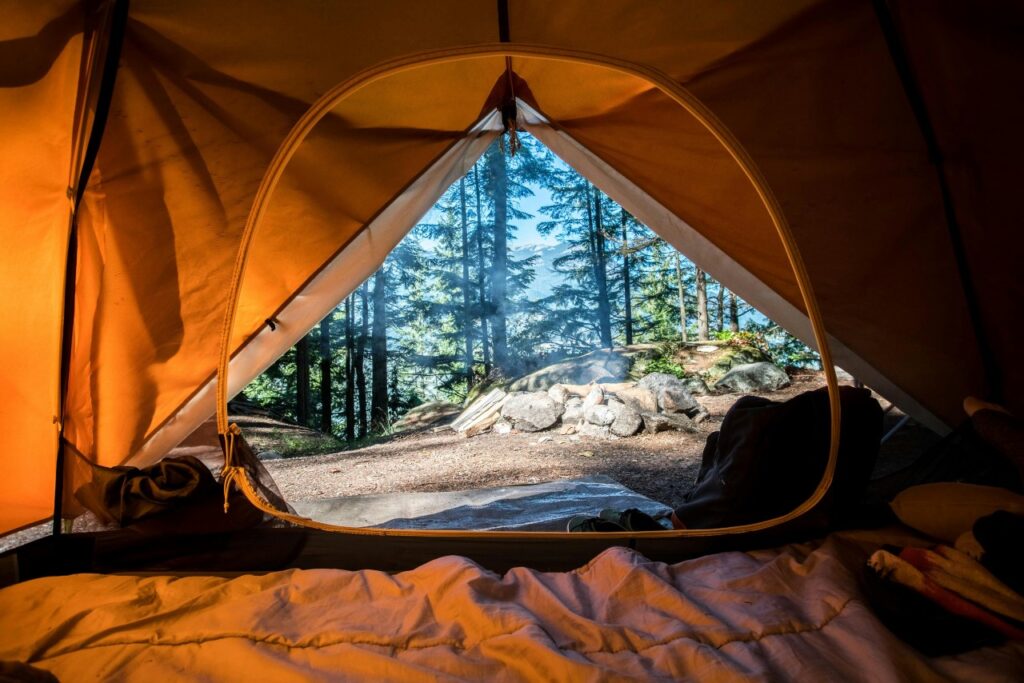
One of the most common challenges when planning a group holiday is that not everyone wants — or can afford — exactly the same experience. Some members of your party might be dreaming of a shepherd’s hut with a hot tub and a proper bed. Others are perfectly happy in a tent, prefer the simplicity of traditional camping, or are working with a tighter budget. The good news is that you don’t have to compromise. An increasing number of sites across the UK now offer glamping and camping side by side, meaning your whole group can holiday together without anyone having to settle for something they didn’t really want.
Why Glamping and Camping Work So Well Together
At first glance, glamping and camping might seem like opposite ends of the outdoor holiday spectrum. Glamping brings the comfort: real beds, private bathrooms, equipped kitchens, and the kind of cosy interiors that make a rainy afternoon feel like a treat rather than a trial. Camping, by contrast, keeps things stripped back — a tent, a sleeping bag, a camping stove, and the satisfying self-sufficiency that many people genuinely love about it.
But the two experiences share far more than they differ. Both put you outside, in nature, away from the routines of home. Both offer evenings around a fire, mornings with birdsong, and the simple pleasure of a landscape you don’t normally see from your kitchen window. When glamping and camping are available on the same site, you get the best of both worlds: everyone arrives together, spends their days together, and gathers around the same fire at night — while sleeping in whatever suits them best.
Who Benefits From Mixed Glamping and Camping?
The combination works particularly well for a few types of group:
Families with teenagers or young adults — Younger members of the family often relish the independence of camping in their own tent while parents enjoy the comfort of a glamping pod or shepherd’s hut nearby. It’s a setup that keeps the family together while giving everyone a little space.
Groups of friends with different budgets — Not everyone in a friendship group is at the same stage financially, and holiday costs can be a source of real stress. Mixed sites allow friends to holiday together without anyone feeling they’re spending more than they’re comfortable with. The campers pay less; the glampers pay more; everyone shares the same fire pit and the same memories.
Multi-generational groups — Grandparents, parents, and kids each have different needs when it comes to sleeping comfort. A site with both camping and glamping options means no one has to compromise on what genuinely works for them, from the oldest member of the group to the youngest who insists on bringing their own tent.
Scout groups, sports teams and club trips — Larger organised groups often include people with a wide range of preferences and experience levels. The option to mix accommodation types makes trip planning considerably easier and opens up sites to groups that might otherwise struggle to find something suitable.
What to Look for in a Site That Offers Both
Not all sites that technically offer camping and glamping deliver the experience equally well. When you’re researching options for a mixed group, there are a few things worth checking:
Proximity of the pitches — The whole point of a mixed stay is that your group can be together. Look for sites where the glamping accommodation and camping pitches are genuinely close to each other, with shared communal areas, fire pit spaces, or central facilities.
Quality of the camping facilities — A site that invests in its glamping accommodation doesn’t always extend that care to its camping pitches. Check that campers have access to clean shower and toilet facilities, decent water points, and level, well-drained ground. A glamping site with poor camping facilities is a false economy.
Shared social spaces — Fire pits, barbecue areas, communal kitchens, and outdoor seating areas are the glue that holds a mixed-accommodation group together. These shared spaces are where the holiday actually happens, so they’re worth prioritising.
Pet-friendly policies — If any member of the group is bringing a dog, make sure both the glamping and camping sections of the site are pet-friendly. Policies sometimes differ between accommodation types on the same site.
Making the Most of a Mixed Glamping and Camping Trip
The key to a successful mixed stay is leaning into what both experiences offer, rather than treating one as a lesser version of the other. A few things that tend to make it work brilliantly:
Plan shared meals around the fire — Whether people are sleeping in a luxury safari tent or a two-man tent, everyone gathers around the same fire. Make it the centrepiece of the trip: communal barbecues, fire-cooked breakfasts, and long evenings under the stars with good food and good company.
Embrace the friendly rivalry — There’s often a good-natured dynamic between the glampers and the campers in a group. Campers enjoy the sense of self-reliance; glampers enjoy the comfort. Both sides tend to enjoy pointing out the advantages of their choice. It usually makes for a better trip.
Use the glamping accommodation as a communal base — If the glamping unit is large enough — a spacious safari tent or a lodge, for example — it can serve as a gathering space for the whole group during the day or in poor weather, while campers retreat to their tents to sleep.
Choose your destination carefully — Certain parts of the UK lend themselves particularly well to mixed glamping and camping trips. Areas with reliable natural beauty and a good range of nearby activities mean that whatever the accommodation, the holiday itself is consistently rewarding.
Glamping and Camping: A Cost Comparison
Budget is often the driving force behind mixed accommodation choices, so it’s worth being realistic about the difference in costs. Glamping accommodation in the UK typically ranges from around £80 to £200 or more per night depending on the style, the site, and the time of year. A well-equipped shepherd’s hut with a hot tub in peak summer is a different proposition to a basic pod in the shoulder season.
Camping pitches at the same sites are often available for considerably less — frequently between £15 and £40 per night for a standard pitch, with hook-up pitches at the higher end. For a group staying for several nights, the saving for those choosing to camp can be significant. The camping members of the group enjoy the same destination, the same communal evenings, and the same experiences during the day — at a fraction of the cost.
Finding Sites That Offer Glamping and Camping Together
The best way to find sites that genuinely cater well to mixed groups is to search specifically for that combination rather than browsing glamping-only directories. Look for sites that list both glamping accommodation and touring or camping pitches, and read recent reviews from groups who’ve stayed in a mixed setup to get a feel for how well the site manages it.
When you make an enquiry, it’s always worth asking directly: how close are the camping pitches to the glamping units? Are there communal spaces where the whole group can gather? Is there a minimum booking on the glamping accommodation for group stays? A site that’s used to welcoming mixed groups will answer these questions easily and confidently.
The Bottom Line
Glamping and camping together is one of the smartest ways to plan a group or family outdoor holiday. It removes the compromise, accommodates different budgets, and keeps everyone in the same place doing the same things — which is the whole point of a group trip. The glampers wake up comfortable and well-rested; the campers wake up with that particular satisfaction that only comes from a night under canvas. By the time everyone’s gathered around the morning fire with a coffee, it really doesn’t matter which side of the site you slept on.
The best holidays aren’t about the accommodation. They’re about the people you share them with — and mixed glamping and camping sites understand that better than most.
Not sure of the distinction? Here’s the difference between glamping and camping.